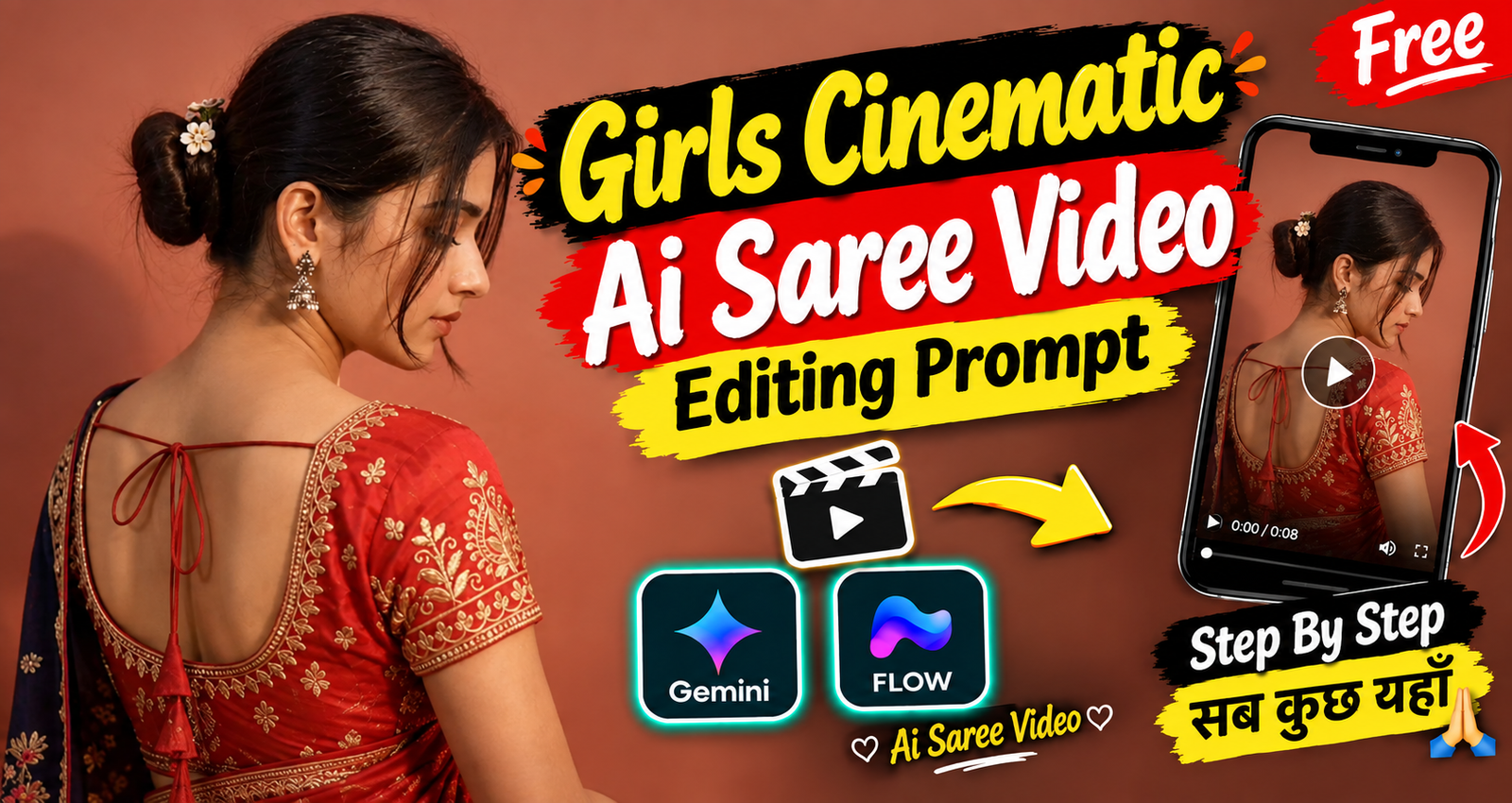
If you look at Instagram, YouTube Shorts, or Facebook Reels these days, you may notice that AI-generated saree photos and videos are becoming increasingly popular. In this type of content, an ordinary photo can be transformed into a beautiful cinematic portrait where the subject appears in a traditional saree with an elegant blouse, jewellery, hairstyle, and a carefully designed background. The video you shared follows this kind of concept, showing a young woman in a beautiful red-and-blue saree with traditional jewellery and different stylish poses. The attractive part of these AI creations is that the final result looks like a professionally planned fashion photoshoot. Different camera angles, expressions, poses, lighting, and backgrounds can be combined to create multiple looks from a single concept. Because of this, creators are using AI-generated saree visuals for Instagram Reels, profile posts, fashion edits, and short-form videos. In this article, we will understand this trending AI saree content in detail and why people are creating and sharing it on social media.
Details About AI Saree Photos and Videos :-
The main concept behind these AI saree visuals is to create a traditional Indian fashion look with a modern cinematic presentation. The saree, blouse design, jewellery, hairstyle, makeup, pose, and background all work together to create the overall appearance. In the video you shared, the combination of a detailed saree border, traditional earrings, neatly styled hair, and a warm studio-style background gives the visuals a polished fashion-portrait look. Another interesting part is the use of multiple poses and expressions. The subject can look toward the camera, turn slightly to the side, adjust the saree, or pose with a soft smile. These small changes make the video feel more like a real photoshoot rather than a collection of static AI images. AI also makes it possible to experiment with different saree colours, blouse patterns, jewellery styles, locations, lighting setups, and cinematic backgrounds. Creators can therefore develop many different versions of the same fashion concept while maintaining a consistent visual style. This makes AI saree content useful not only for Reels but also for profile pictures, Instagram posts, thumbnails, and fashion-themed edits.
Why Are AI Saree Videos Trending?
AI saree videos are getting attention because they combine Indian traditional fashion with modern AI-generated visuals. Sarees already have a strong presence in Indian fashion and social-media content, while AI allows creators to present the same traditional style in a more cinematic and visually creative way. Another reason is the transformation factor. Viewers can see how an AI-generated character or photo is presented in different outfits, poses, and environments, which makes the content interesting to watch. Beautiful saree designs, jewellery, hairstyles, soft expressions, and cinematic lighting can also make these videos visually appealing when scrolling through short-form platforms. Because of this combination of traditional saree fashion + AI creativity + cinematic presentation, creators are experimenting with many variations of this trend on Instagram Reels, YouTube Shorts, and Facebook. The same concept can also be adapted into different saree styles, colours, poses, backgrounds, and storytelling formats to create fresh AI fashion content.
How to Create Video?
So friends, if you also want to create those ‘trending’ Cinematic Girls Saree Reels, here is the step-by-step method. By following this, you can create such videos, post them on your social media platforms, and boost the views on your Reels. Let me show you how it’s done.
- So first of all you will see a prompt above, you have to copy it.
- After the prompt is copied, you have to click on the Generate Video button below.
- Then you have to paste the simple prompt directly there.
- And there you have to select the size, the type of ratio 16:9 which you want to make.
- And as soon as you send it, your video will be generated in a few seconds and you have to download it.
What Is The Google Flow Ai?
So friends, let me explain what Google Flow AI actually is. As you know, Google Flow AI is a Google-owned platform designed for creating cinematic videos with AI. You can create videos from text prompts, use images as visual references, and generate scenes based on the instructions you provide. It is useful for creating different types of cinematic videos, including devotional AI videos, retro videos, and other trending social media content. Google Flow AI can help you transform a still photo into a video when the relevant image-to-video features are available. You simply need to provide your photo and a suitable prompt, and the AI tool generates a video based on your instructions. The exact features, free credits, video duration, and aspect ratios available may depend on your account, region, and current Google Flow options. Some features may require credits or a paid plan, so check the available settings before generating your video. People are using AI video tools to create creative content for Instagram and other social media platforms. In this article, I have also explained how you can use a Parvati Ji-inspired prompt to create a beautiful devotional cinematic video. So, if you also want to try this trending AI video editing style, simply follow the steps given above, upload your photo, copy the prompt, and create your own devotional cinematic video using Google Flow AI.
Conclusion :-
So friends, I have told you everything about how you will get the prompt, how to generate the video from your prompt, which AI tool to use and how to use it, I have told you all this. If you have read this article properly and understood it, then you too will be able to make a video with such a cinematic saree. And if you make such videos and upload them on social media, there is every chance of them going viral. Because this is different from all and now such